The Feelings Wheel: Precision Beats 'Fine' (Here's How)

The MoodKit Team
· 3 min read
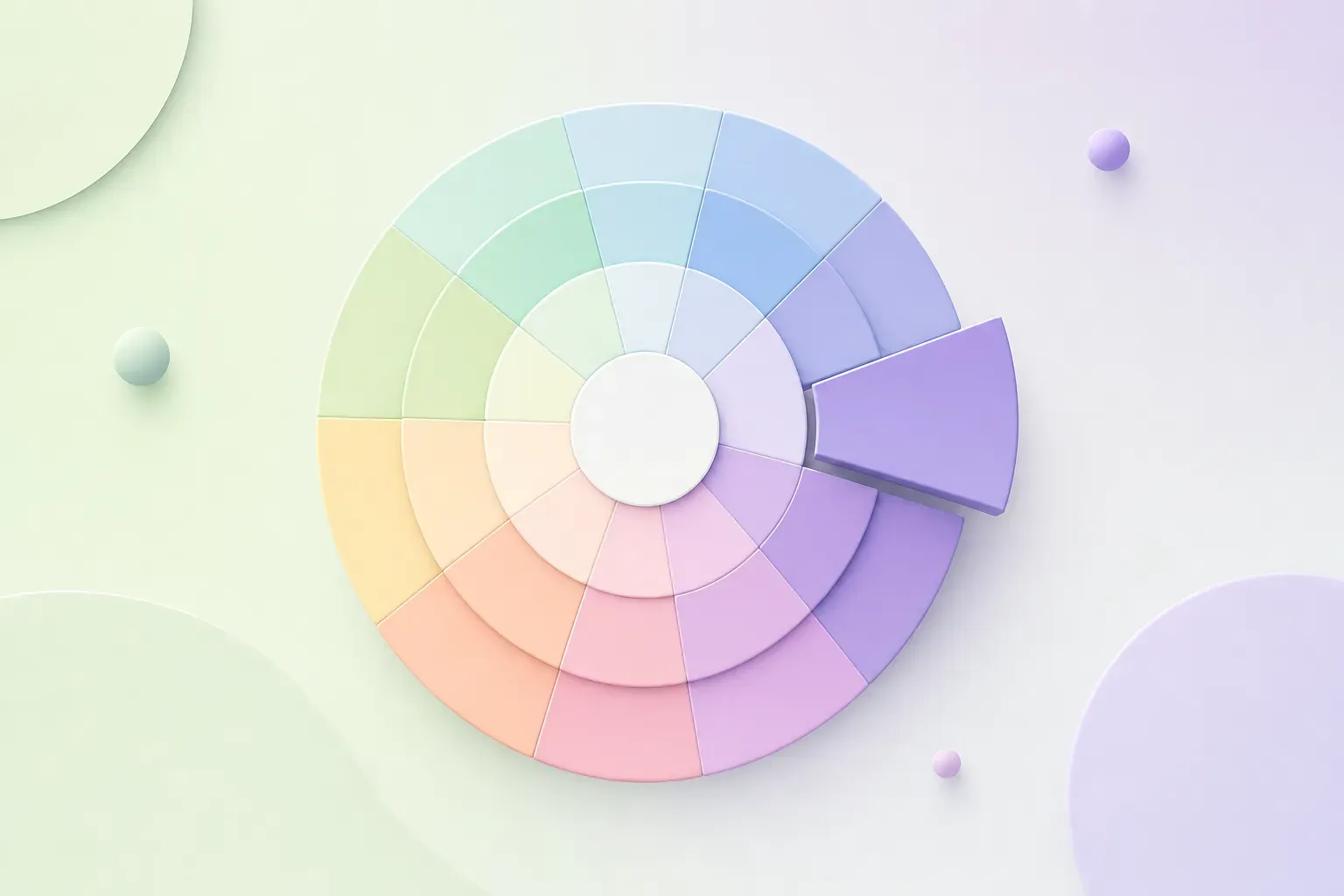
“How are you?” “Fine.” Both of you know that’s not an answer. The feelings wheel exists for exactly this: a circular map with broad emotion families at the center (sad, angry, afraid, happy, surprised, disgusted) fanning out to precise words at the rim (left out, resentful, inadequate, hopeful). You find the nearest center, walk outward, and somewhere in the outer ring a word clicks. If you’ve never played with one, The Pudding’s interactive walk-through is a lovely ten minutes.
It looks like a poster for a therapist’s office. It’s actually a training tool for a measurable skill, and it pairs beautifully with mood tracking, which is the part this guide adds. (Disclosure: we build MoodKit, a mood tracker; the wheel itself needs nothing but your eyes.)
The skill under the wheel
Psychologists call it emotional granularity: the difference between “I feel bad” and “I feel left out.” People who name feelings precisely tend to regulate them better, and the effect shows up under lab conditions. In a classic exposure study, spider-fearful participants who put their fear into specific words ended up with calmer skin-conductance responses at follow-up than those who distracted or reframed. Precise names come with precise options: “left out” suggests texting a friend; “bad” suggests nothing.
Two wheels dominate, and PositivePsychology’s overview sorts them well: the Willcox-style layered wheel is the everyday naming aid, while Plutchik’s eight-petal version is really a theory diagram. For daily use, take Willcox-style and don’t overthink it.
A 30-second practice that sticks
Forget journaling sessions. The wheel works as a micro-habit bolted onto check-ins you already make:
- Notice the vague signal (“off,” “tense,” “meh”).
- Locate the nearest core on the wheel.
- Walk outward one or two rings until a word fits. First-guess words are usually one ring too shallow; push once more.
- Record the word somewhere dated, with a scrap of context.
Step 4 is where a tracker earns its place, because words you never revisit don’t build the skill. In practice the recording layer looks like basic mood logging: a quick 1-to-5, activity tags, and the precise word in a one-line note. Fifteen to thirty seconds, done.
Wiring the wheel into a tracker
Here’s the design question nobody warns you about: should your tracker have five moods or fifty? Apps disagree. How We Feel is built around a huge emotion vocabulary, and it’s genuinely the granularity-first choice; we’ve compared it with MoodKit honestly. MoodKit’s answer is a deliberate hybrid:
- Keep the 1-to-5 scale as the spine. Trend math, streaks, and driver analysis need a consistent axis, and fifty unique moods make “is Tuesday better than Monday” unanswerable.
- Add custom moods for your frequent states. MoodKit lets you create moods with any emoji, label, and color. Most people’s wheel-walking converges on a personal handful: maybe drained, resentful, cozy, wired. Promote those to first-class moods; leave the other forty-six words in notes.
- Let tags carry the causes. “Resentful” plus a work tag, logged a dozen times, becomes a pattern MoodKit’s engine can actually rank, not just a poetic entry.
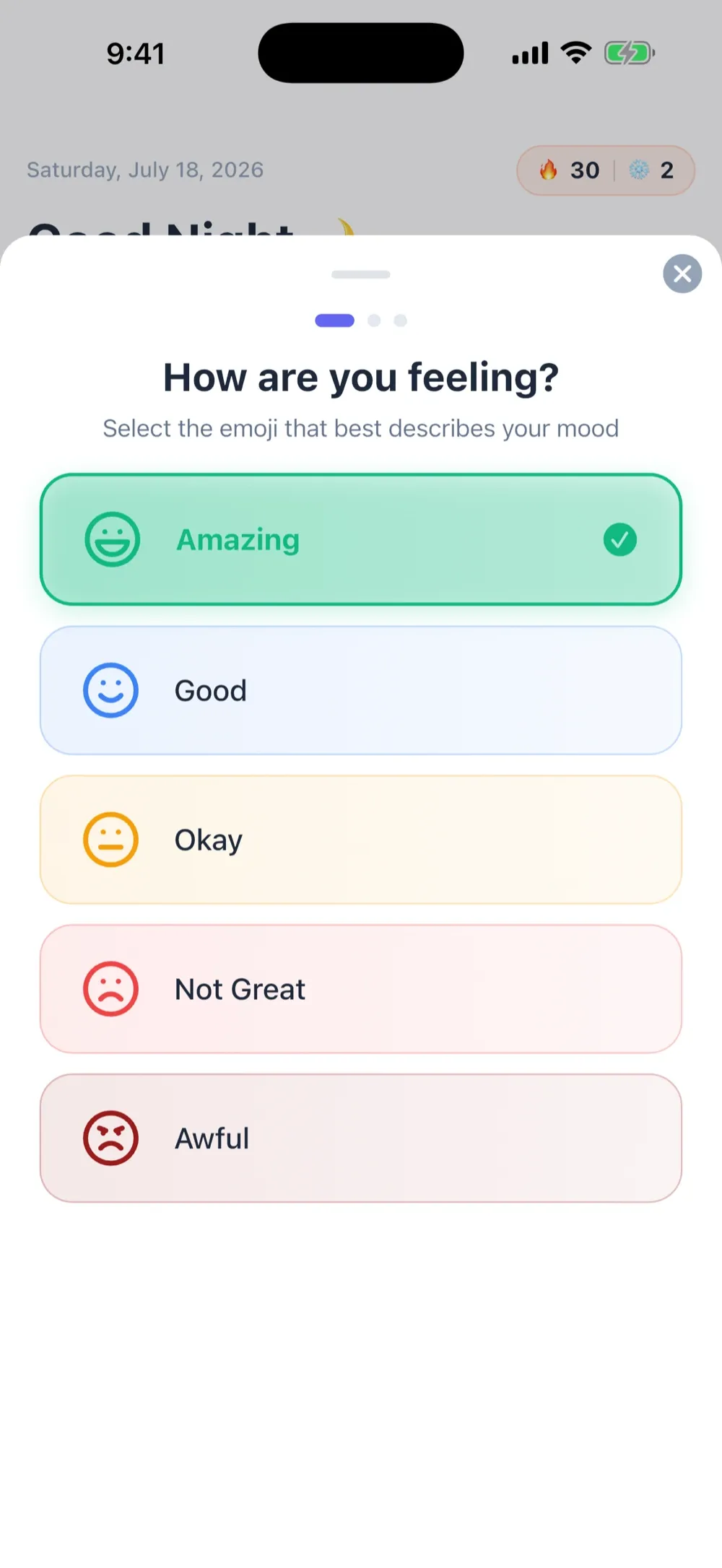
Our opinionated rule of thumb: five core levels, three to five custom moods, unlimited vocabulary in the notes. Precision in the label, consistency in the scale.
When the wheel gets awkward
Honesty about the tool’s edges. Wheel words are self-report, subject to mood-of-the-moment bias like all self-tracking. Some states genuinely sit between spokes, and forcing a word can feel false; “somewhere between anxious and excited” is itself a precise observation, log that. And granularity is a means, not a scoreboard: if you’re spending three minutes hunting the perfect word, you’ve left regulation and entered vocabulary homework. The point is the click of recognition, the “name it to tame it” moment, and then getting on with your day.
Fastest way to start tonight: pull up a wheel image, do the four steps once, and put the word in whatever tracker you’ll actually open tomorrow. If you need starting material for the note itself, the mood journal prompts are built for entries that stay under two minutes.
Frequently asked questions
What is a feelings wheel?
A circular chart that organizes emotions from broad cores (sad, angry, afraid, happy) in the center to precise variants (left out, resentful, inadequate, proud) in the outer rings. You start from the nearest core and walk outward until a word clicks.
Which feelings wheel should I use?
For everyday naming, a Willcox-style layered wheel is the practical pick; Plutchik's wheel is more a theory diagram of how emotions relate. Any version you'll actually look at beats the academically perfect one.
Does naming emotions really change anything?
There's solid evidence that precise labeling helps regulation: in a well-known exposure study, people who named their fear in specific words showed calmer physiological responses at follow-up than people who distracted themselves. Psychologists call the skill emotional granularity.
Do I need to log 40 different emotions in my tracker?
No, and most people shouldn't. Keep a simple 1-to-5 scale for trend math, and add a handful of custom moods for the specific states that matter in your life. Precision in the label, consistency in the scale.
Keep reading
How We Feel vs MoodKit (2026): Name Feelings or Explain Them?
How We Feel teaches you to name emotions with scientific precision, free. MoodKit measures what drives them. A fair look at which app fits your stage.
· 4 min read

How to Track Your Mood: The Complete 2026 Guide
A practical system for mood tracking that survives real life: picking a scale, tagging context, staying consistent, reading patterns, and testing changes.
· 5 min read

30 Mood Journal Prompts That Take Two Minutes or Less
Short, specific prompts for morning, evening, bad days, and weekly reviews, built for check-ins you'll still be doing in December, not day-one essays.
· 4 min read