Mood Tracking With ADHD: Design for the Brain You Have
The MoodKit Team
· 4 min read

Quick scope note before anything: ADHD is clinical territory, this article isn’t medical advice, and no mood app diagnoses or treats anything. What’s below is logistics: how to get a mood log to survive contact with an ADHD brain, because the payoff is real and the failure rate is enormous.
The payoff first. Emotional dysregulation isn’t a side quest of ADHD; reviews now argue it’s a core feature of the adult condition, and CHADD puts big feelings squarely on the symptom map. Which means the mood swings have structure: triggers, time-of-day shapes, sleep sensitivity. Structure is exactly what a log surfaces, and a dated log is gold at your next appointment.
The failure rate second. Tracking asks you to remember an unprompted daily task, repeat it forever, and enjoy none of it immediately. That’s a checklist of things ADHD is worst at. So the game isn’t finding a special “ADHD mood tracker”; it’s engineering the friction to near zero. (Disclosure: we build MoodKit, and several of its choices happen to be exactly this kind of engineering, so it appears throughout. It also has real limits for this use case, listed plainly below.)
Rule one: the log must come to you
Any system that requires remembering, finding the app, opening it is dead by Thursday. The fixes, in order of power:
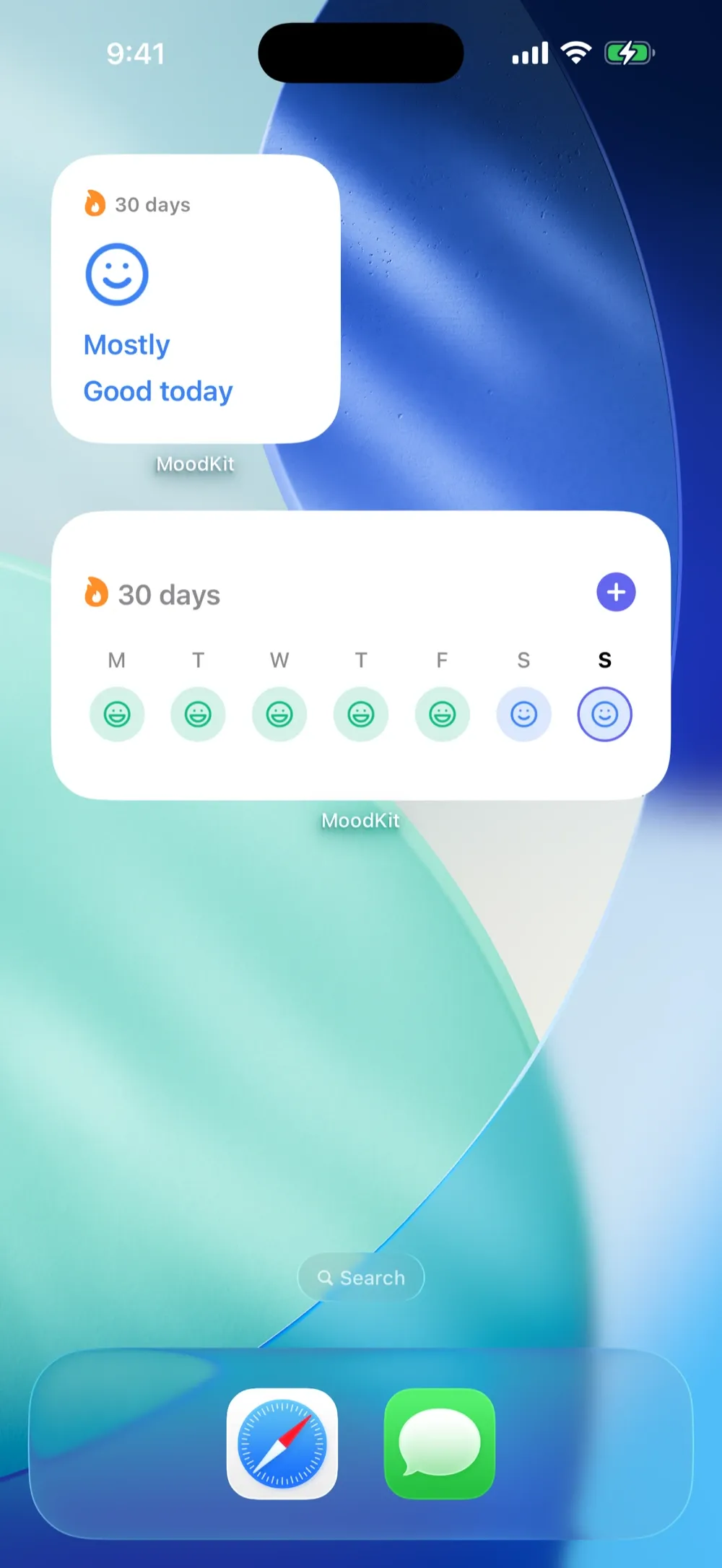
- Widgets. A mood widget on the Home Screen is a visual cue you can’t not see, and on iOS 17+ the tap on the widget is the log. The widget comparison shows which apps do this; MoodKit’s Today widget logs in one tap and shows your streak.
- Notification logging. MoodKit’s reminders carry five mood buttons on the notification itself, so a check-in survives even a day you never open the app. For an ADHD setup this is the single highest-value feature we ship.
- Body-anchored timing. Attach reminders to existing anchors (morning coffee, plugging the phone in at night), not to arbitrary clock times you’ll learn to swipe away.
Rule two: streaks must forgive
Streak mechanics cut both ways here. They generate exactly the quick-feedback dopamine that keeps an ADHD brain engaged, and then one chaotic Tuesday breaks the chain and the entire system gets abandoned in disgust. If you’ve rage-quit a habit app over a lost streak, you know this isn’t hypothetical.
So pick forgiving mechanics on purpose. MoodKit banks streak freezes, so a busy day spends a freeze instead of zeroing you, and sends one gentle evening heads-up when a streak is at risk; its 30 achievements reward showing up rather than perfection. Perfectionist all-or-nothing scoring is the wrong drug for this brain.
Rule three: fifteen seconds, then stop
Long journaling prompts feel virtuous on day one and become the reason you quit on day nine. Keep the unit of work tiny: a 1-to-5 mood, a few tags, optionally one sentence. The general method applies, with one ADHD-specific tag list worth stealing:
- Sleep debt (last night short? logged automatically if a wearable writes to Apple Health, which MoodKit reads as a driver)
- Hyperfocus day — often a great mood and a skipped-meals crash behind it
- Task avoidance spiral, overwhelm, RSD moment (that rejection-crash pattern)
- Meds late/skipped, as a plain custom tag, within the limits below
Two weeks of that and the pattern engine has material: MoodKit’s Impact Leaderboard ranks which of these actually move your mood, and the trigger-hunting method turns the suspects into answers. Pair it with a dopamine menu and you can test which recovery activities genuinely reset you instead of which ones merely feel like they should.
Where MoodKit is the wrong tool for ADHD
Being specific about our own limits: MoodKit has no medication tracking, no symptom charting, and no clinician-report export designed for psychiatry visits (CSV export exists, purpose-built reports don’t). If med timing and symptom curves are the center of your question, Bearable or eMoods serve that job better, and we’d rather you buy the right thing. MoodKit’s lane is the mood-and-context layer: what days look like, what drives them, and whether a change helped. There’s also no permanent free tier (trial, then $39.99/year or a one-time $79.99 lifetime), and it’s iPhone/iPad only.
One last reframe, from watching a lot of abandoned trackers: with ADHD, a missed week isn’t failure, it’s data about friction. Don’t restart with more discipline; restart with fewer steps. The version of tracking that works is the one that fits the brain you actually have.
Frequently asked questions
Why is mood tracking harder with ADHD?
The task is built out of ADHD's weak points: remembering an unprompted routine, doing it daily, and tolerating a boring interface. The fix isn't more willpower, it's removing steps — widgets, one-tap logging from notifications, and streaks that forgive a missed day.
Can a mood tracker diagnose or treat ADHD?
No. Tracking shows you patterns in your own days; diagnosis and treatment belong to clinicians. A dated mood log can, however, make appointments dramatically more useful than "things have been up and down."
Should I track medication effects in a mood app?
If medication timing is the main thing you want to chart, a dedicated symptom-and-meds tracker like Bearable or eMoods fits better; MoodKit has no medication tracking. A workaround some people use is a custom activity tag for "took meds late" style events.
What's rejection sensitive dysphoria and can I track it?
RSD is the intense mood crash after perceived criticism or rejection that many people with ADHD describe. It's not a formal diagnosis, but as a pattern it's very trackable: a custom tag on entries that follow those moments will show you its real frequency and weight.
Keep reading

Best iPhone Mood Tracker Widgets in 2026 (Home & Lock Screen)
Which mood trackers actually ship useful iPhone widgets in 2026 — one-tap logging, streaks, and Year in Pixels grids — and which big names still have none.
· 4 min read

The Dopamine Menu, Data-Tested: Keep What Actually Works
Dopamine menus are everywhere in 2026. Most are guesses. Here's how to build one, then let two weeks of mood data promote or fire every item on it.
· 4 min read

How to Find Your Mood Triggers (With Data, Not Guesswork)
A practical method for identifying what really sets off your bad days: build a suspect list, log context for two weeks, read the patterns, then test one change.
· 3 min read