Mood and Your Cycle: Track the Real Pattern, Skip the Hype
The MoodKit Team
· 4 min read

A scope note first: this is a tracking guide, not medical advice. Severe premenstrual mood symptoms (the rage-despair-hopelessness kind that wreck a week every month) can be PMDD, which is real, diagnosable, and treatable; that conversation belongs with a clinician, and the dated log this guide produces happens to be great evidence to bring along.
Now, the trend. “Luteal phase” went from biology-class vocabulary to a full content genre, and the backlash has a point: commentators note the risk of pathologizing a normal phase into a monthly doom-week, with the wellness industry happy to sell the cure. Both extremes are guessing about you. The hormone physiology is real (the Cleveland Clinic’s cycle-syncing overview covers what each phase typically does), and the individual variation is huge. Some people barely register the luteal drop; some lose most of a week to it. The only way to know which you are is your own data. (Disclosure: we build MoodKit, which has no cycle tracking of its own, so this guide is honest about the two-app setup it takes.)
The two-app setup that works
MoodKit doesn’t track periods and doesn’t read cycle data from Apple Health (it reads sleep, exercise, and steps). So the practical rig is:
- A period app you already trust owns the dates and predictions. Apple’s Health app does this natively if you’d rather not add anything.
- MoodKit owns the mood layer: 1-to-5 check-ins with activity tags, per the standard method, plus one addition below.
The addition: phase tags. Create custom activities named for the phases you care about; a practical minimal set is luteal-week (the ~5 days before your period), period, and optionally follicular for the post-period stretch. Tag today’s entries accordingly, using the period app as your reference for where you are. One tap per check-in, and suddenly your phases are first-class citizens in the analysis.
What the phase tags unlock
MoodKit treats a phase tag like any other activity, which is exactly the point:
- The Impact Leaderboard puts a measured number on each phase: not “luteal is bad” but “luteal-week days average 0.7 lower, across 15 logged days.” Numbers kill both the hype and the denial.
- The brings-you-down view shows whether the phase itself outranks the usual suspects (short sleep, conflict, alcohol) or whether those suspects just cluster inside the phase, which is a genuinely different problem with a different fix.
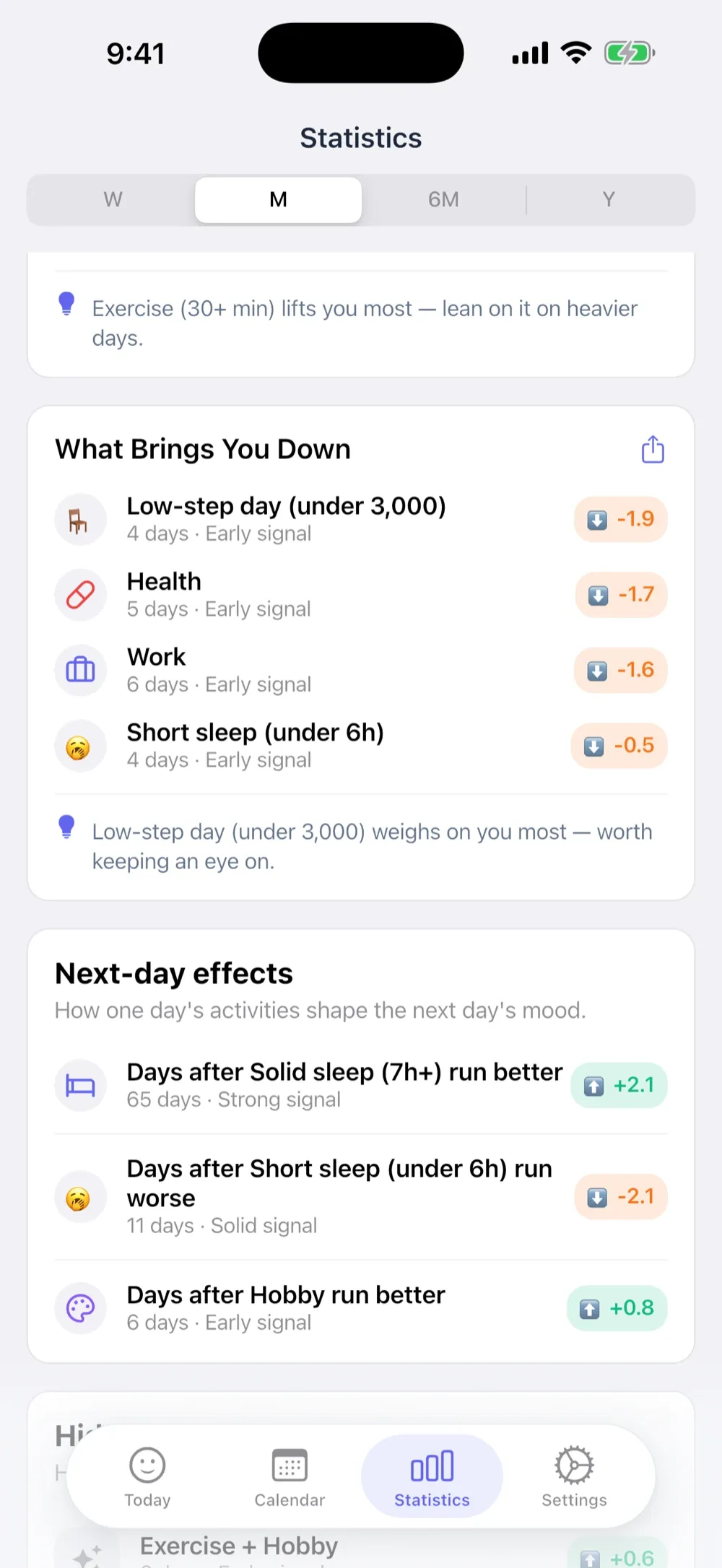
- Hidden Patterns can surface the combinations that matter most here, because the luteal effect is rarely solo: short sleep plus luteal week is a notoriously different animal than either alone.
One structural warning so the data doesn’t mislead you: MoodKit’s Weekly Rhythms feature reads 7-day patterns, and a ~28-day cycle is invisible to it; a cycle can even masquerade as a weekday effect for a month or two. Trust the phase tags and the calendar view for this question, not the weekday chart, and give it two to three full cycles before believing any pattern. Each month is only one sample per phase.
From pattern to plan
Say two cycles in, the leaderboard confirms a real luteal dip. What that buys you is scheduling power, the same payoff as any well-identified trigger: guard sleep ferociously that week, front-load stressful commitments into your follicular stretch where you can, prep the freezer meals, warn yourself on day one that the gloom has a known cause and a known end date. Predictability is most of the relief.
It also buys you a clean test bench. If you’re tempted by a cycle-syncing intervention (earlier bedtimes in luteal week, magnesium, cutting alcohol those days), run it as a proper one-phase self-experiment instead of adopting the whole influencer protocol at once. One change, one cycle, compare against the previous cycle’s luteal tags. MoodKit’s experiments will give you a verdict either way, including “that did nothing,” which with cycle products is a verdict worth its weight.
And if the data shows the severe version, luteal weeks consistently landing at 1-out-of-5 with life disruption to match, take the log to a professional and say the letters PMDD out loud. Anxiety-flavored patterns have their own tracking guide, and the same rule applies there: self-tracking sorts signal from noise, and humans handle the serious signals.
Frequently asked questions
Why do I feel worse in the luteal phase?
In the late luteal phase (roughly the week before a period), estrogen and progesterone drop quickly, and mood, energy, and sleep commonly dip with them. The size of the effect varies enormously between people, which is why tracking your own pattern beats assuming the meme version.
How is PMDD different from PMS mood swings?
PMDD (premenstrual dysphoric disorder) is a severe, diagnosable condition: the premenstrual days bring depression, rage, or hopelessness strong enough to disrupt life, month after month. It's treatable and it warrants a clinician, and a dated mood log is exactly the evidence that speeds that conversation up.
Can MoodKit track my cycle?
Not natively: MoodKit has no period tracking and doesn't read cycle data from Apple Health. The working setup is a period app for dates plus phase tags in MoodKit, which its analysis then treats like any other activity and ranks by measured mood effect.
How many cycles until the data means something?
Two full cycles is the floor for a believable pattern, three is better. A weekday-style pattern repeats every 7 days; yours repeats every cycle, so each month is only one data point per phase.
Keep reading
How to Find Your Mood Triggers (With Data, Not Guesswork)
A practical method for identifying what really sets off your bad days: build a suspect list, log context for two weeks, read the patterns, then test one change.
· 3 min read
How to Track Your Mood: The Complete 2026 Guide
A practical system for mood tracking that survives real life: picking a scale, tagging context, staying consistent, reading patterns, and testing changes.
· 5 min read

Best Mood Trackers for Anxiety & Stress in 2026 (6 Picks)
For anxious days and stressful seasons: apps that help you spot worry patterns, test what calms you, and see triggers in your own data — honestly compared.
· 4 min read