Perimenopause Mood Swings: A Tracking Setup That Shows Patterns
The MoodKit Team
· 4 min read
This article is general information, not medical advice. Perimenopausal depression and anxiety are treatable; if your lows are heavy or lasting, talk to a clinician. If you have thoughts of harming yourself, call or text 988 in the US.
“Is it hormones, or is it my life?” is the question under most perimenopause mood conversations, and it’s a fair one, because the answer is usually “both, in proportions that change week to week.” The American College of Obstetricians and Gynecologists is blunt that mood changes during perimenopause are real, and The Menopause Society notes that the risk of depression rises during the transition. Apple has noticed the audience too: iOS 27, rolling out this month, extends Cycle Tracking with perimenopause and menopause support built on long-term cycle data.
What none of that gives you is a way to tell your hormonal weeks from your bad-sleep weeks from your the-kids-and-the-parents-and-the-job weeks. That takes a log, and it takes two apps. (Disclosure: we build MoodKit, which has no cycle or symptom tracking of its own. It handles the mood half of the setup below, and we’ve tried to be straight about where the other half has to come from.)
Why perimenopause is harder to track than PMS
The luteal-phase method works because you can count: day 24 means something. Perimenopause breaks the count. Cycles stretch, shorten, skip, and double up, so “where am I in my cycle” stops being a number you can line your mood up against.
Two other things change. Sleep gets disrupted, by night sweats and by the hormones themselves, and short sleep is such a strong mood driver that it can impersonate a hormonal low. And the years from roughly 45 to 55 tend to be the heaviest life-load years there are. Three plausible causes, one feeling. A useful log has to hold all three.
The two-app rig
| What you’re logging | Where it lives | Why it’s there |
|---|---|---|
| Cycle dates, flow, hot flashes, night sweats | Apple Health Cycle Tracking (free; perimenopause features in iOS 27) or a dedicated cycle app | The hormonal timeline, irregular as it is |
| Sleep | Apple Health, from your iPhone or any wearable | The confounder that most often masquerades as hormones |
| Mood, 1 to 5, plus custom moods like “irritable” or “flat” | MoodKit | The outcome you actually care about |
| What you did: exercise, work, alcohol, caffeine, social, outdoors | MoodKit tags | The life half of the question |
MoodKit reads sleep, exercise, and steps from Apple Health and ranks them next to your tagged activities, so short nights compete on the same leaderboard as everything else. It doesn’t read cycle data from Health, so the cycle app stays open on its own. Two apps, fifteen seconds of logging a day, and a calendar in each you can lay side by side.
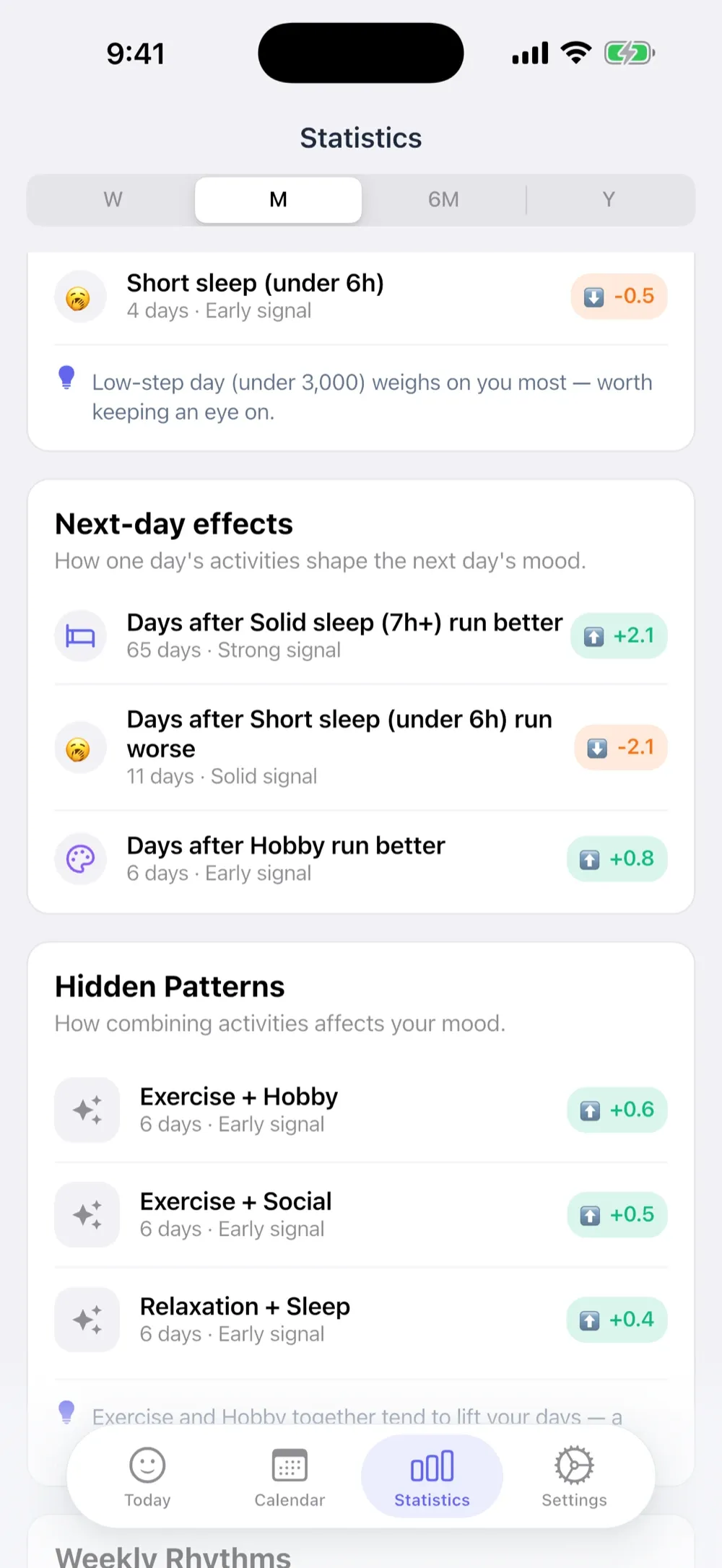
Custom moods earn their keep here. The standard five-point scale flattens “wired and snappy” and “flat and tearful” into the same 2, and they aren’t the same thing. Name them, as the feelings wheel approach suggests, and the log starts distinguishing days that felt identical at the time.
What to look for after a month
- Sleep at the top of the drivers. For a lot of people this is the whole story: the mood dips track the broken nights, and the broken nights track the sweats. That’s not less hormonal, but it points at a different lever (sleep, and the symptoms breaking it) than “mood” does.
- Clusters, not cycles. Lay the cycle calendar next to the mood calendar. Irregular cycles still produce runs of low days around bleeds or around skipped ones. You’re looking for clusters in the weeks before bleeding, not a fixed day number.
- Life tags that survive the hormones. If exercise or time with friends still lifts your score even in the rough weeks, that’s worth knowing, and it’s the kind of thing MoodKit’s activity ranking shows plainly. The sleep and mood guide covers the sleep-side reading in more depth.
Give it a month before drawing conclusions. Perimenopause is noisy by definition, and a fortnight of data will show you noise.
Bring the pattern to your clinician
This is where the log pays for itself. “My mood’s been all over the place” gets a sympathetic nod. “Here are eight weeks: the lows cluster in the week before I bleed, they’re worst after nights under six hours, and exercise still helps” gets a plan. MoodKit exports your entries to CSV, and its calendar and monthly snapshot views make a screenshot you can hand over. ACOG lists real options, from hormone therapy to antidepressants and talk therapy; which is right for you is a conversation for the appointment, and the guide to using mood data in therapy covers how to present it.
The limits, plainly: MoodKit has no cycle tracking, no symptom or medication tracking, no Apple Watch app, and no permanent free tier after the trial ($39.99 a year or $79.99 lifetime). For separating hormones from sleep from life, though, mood plus tags plus Health sleep is the combination that does the separating.
Frequently asked questions
Are mood swings in perimenopause normal?
Common, yes. ACOG says mood changes during perimenopause are real and linked to fluctuating hormones, and the risk of depression rises during the transition. Common doesn't mean you have to put up with it: perimenopausal depression and anxiety are treatable, so a clinician is the right call if the lows are heavy or persistent.
Can MoodKit track hot flashes or periods?
No. MoodKit tracks mood, the activities you tag, and sleep, exercise, and steps from Apple Health. It has no cycle or symptom tracking, so this guide pairs it with a cycle app. You can add a custom tag like "hot flash" to a mood entry, but that's a note, not a symptom log.
How is this different from PMDD or PMS tracking?
PMS and PMDD follow a cycle you can count from. Perimenopause is defined by cycles becoming irregular, so day-counting stops working and sleep disruption becomes a bigger factor. The method leans on sleep data and longer windows rather than cycle days.
When should I see a doctor about perimenopause mood?
If low mood or anxiety lasts most days for two weeks or more, if it's affecting work or relationships, or if you have any thoughts of harming yourself (call or text 988 in the US). Bring your log; it shortens the conversation.
Keep reading

Mood and Your Cycle: Track the Real Pattern, Skip the Hype
Luteal-phase content is everywhere, but your hormones aren't a meme. Here's how to find your actual cycle-mood pattern with phase tags and honest data.
· 4 min read

Sleep and Mood: Stop Guessing, See It in Your Own Data
Fifty years of research says sleep loss drags mood down. Here's how to measure the effect in your own life with Apple Health and a two-week log.
· 3 min read

Mood Tracking for Therapy: Turn Your Log Into Better Sessions
Therapy is expensive and fifty minutes is short. A mood log you actually keep turns 'how was your week?' into specifics. What to track, and how to share it.
· 5 min read